
Autodial For Faster Conversion in Native App
Background
Currently, after the lead is assigned to TSO, the lead prioritization/management and follow up activities are completely controlled by TSO. This brings lots of inefficiencies in the lead closure process because TSOs work at their own pace and may not work on relevant/priority leads at the right time. Thus, the idea is to simplify the user journey for the agent while automating lead management and follow up processes through Autodial, so that TSO Productivity and Lead Conversion can be improved.
Research
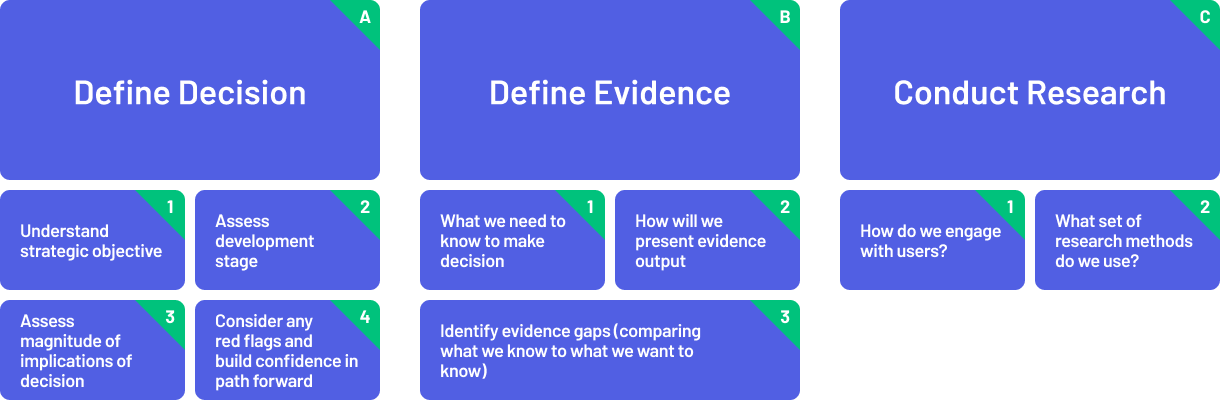
We will adapt the Decision First approach to gather user insights and synthesize user feedback. Firstly, we will define the decision to take, which will inform us about what data/evidence we need to collect. Hence, having an exact understanding of required evidence, we will proceed to do research which will enable us to make data-informed decisions.
Defining Decision
- Understand Strategic Objective: Our ultimate business objective is to drive up the productivity and conversion of TSO.
- Assess Development Stage: In the product life cycle (Discover > Design > Develop > Deploy), we are in between Discover (Problem Identification/Prioritization) and Design (Solution Design/Validation) phase.
- Assess magnitude of implications of decision: As Sales App experience revamp will incur significant resources, stakeholders and user impact, this decision will have high magnitude of implications. Thus involve looping in multiple stakeholders.
- Consider any red flags and build confidence in path forward: As this revamp is in the interest of all concerned stakeholders, no red flag in path forward.
Defining Evidence
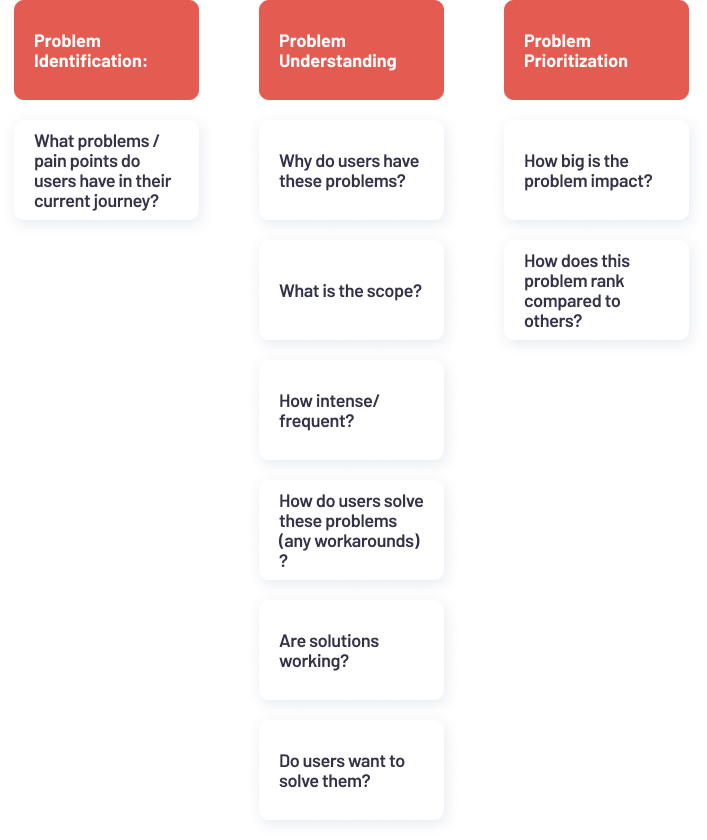
Evidence strengthens confidence in the relation between Objective and Decision.
Stage 1 : General questions we want to get answered before designing solutions
Stage 2 : Describing Evidence needs

Stage 3 : Questions we want to get answered after designing solutions (if required)

Conduct Research
As the goal of our research is to identify and understand user problems in depth, both quantitative and qualitative methods with/without stimulus would be helpful.
- Firstly, we will understand the incentive structure of the sales team to understand the basic motivations and drivers of the Sales team.
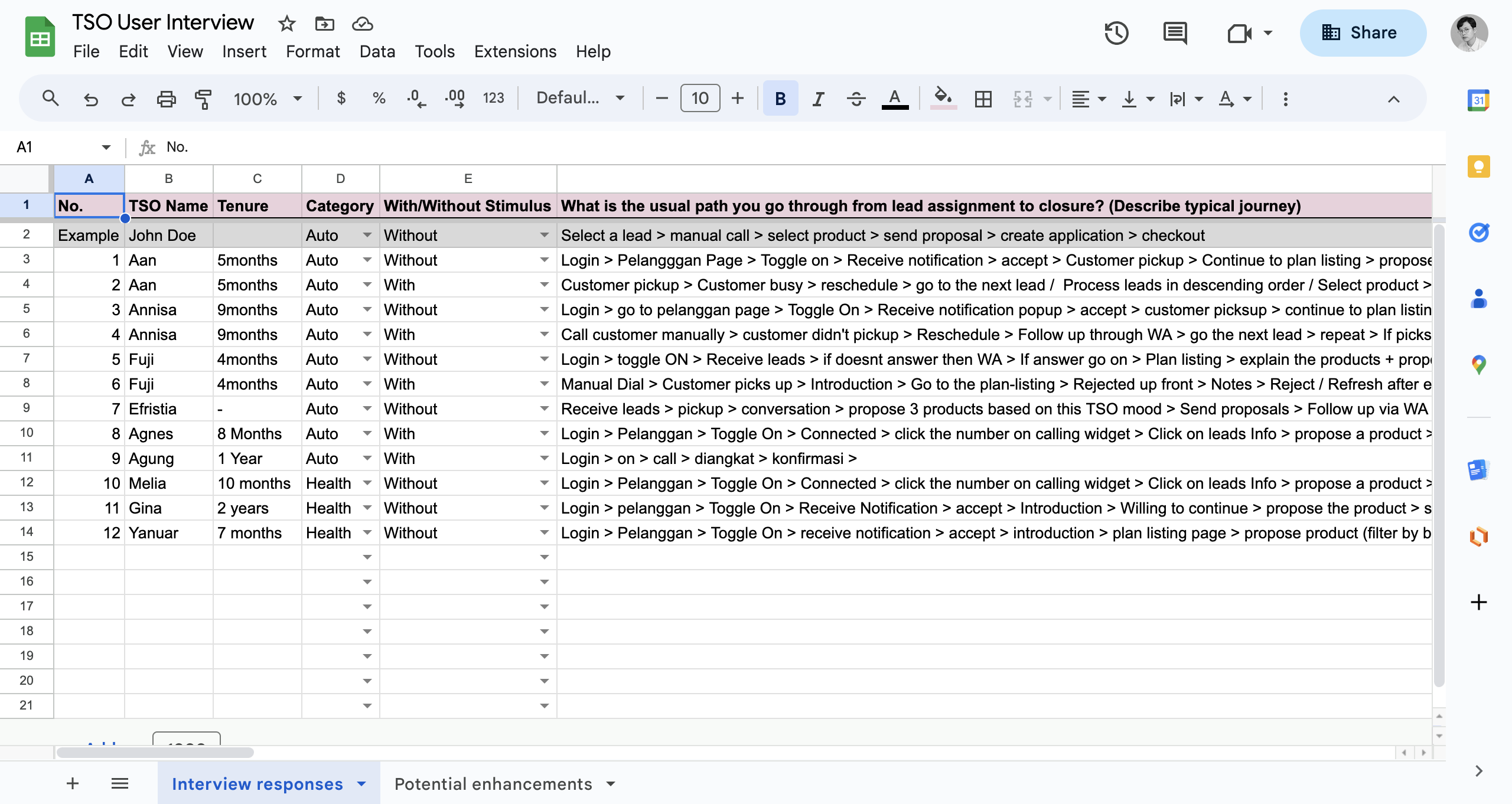
- Secondly, we will conduct qualitative research without+with stimulus (stimulus: sales app) with TSOs to understand their general flow, pain points in the journey, and motivations/fears.
- Thirdly, we will interview 2-3 SPVs as well to understand their perspective about Sales app experience.
- Lastly, we will look at quantitative data showing user behaviour (user journey metrics).
Step 1: Understand Sales Incentive Structure
- What is the payout structure of TSOs? What are the different means by which TSOs get compensated and on what basis?
- Are TSOs happy with the current payout structure? If not, what do they expect?
- Any plans to update the incentive structure of TSOs from the management side? If yes, what does the new proposed structure look like?
Step 2: Conduct Qualitative Research with TSOs
We should conduct this research interview with 7 TSOs (3 veterans+2 med tenured+2new) to get a good mix of opinions. Start with asking questions without any bias/stimulus. Probe them to dig deeper. After they have exhausted their opinions, start the second stage. In the second stage, ask them to navigate through the sales app and ask second stage probing questions.
Without Stimulus (Sales app)
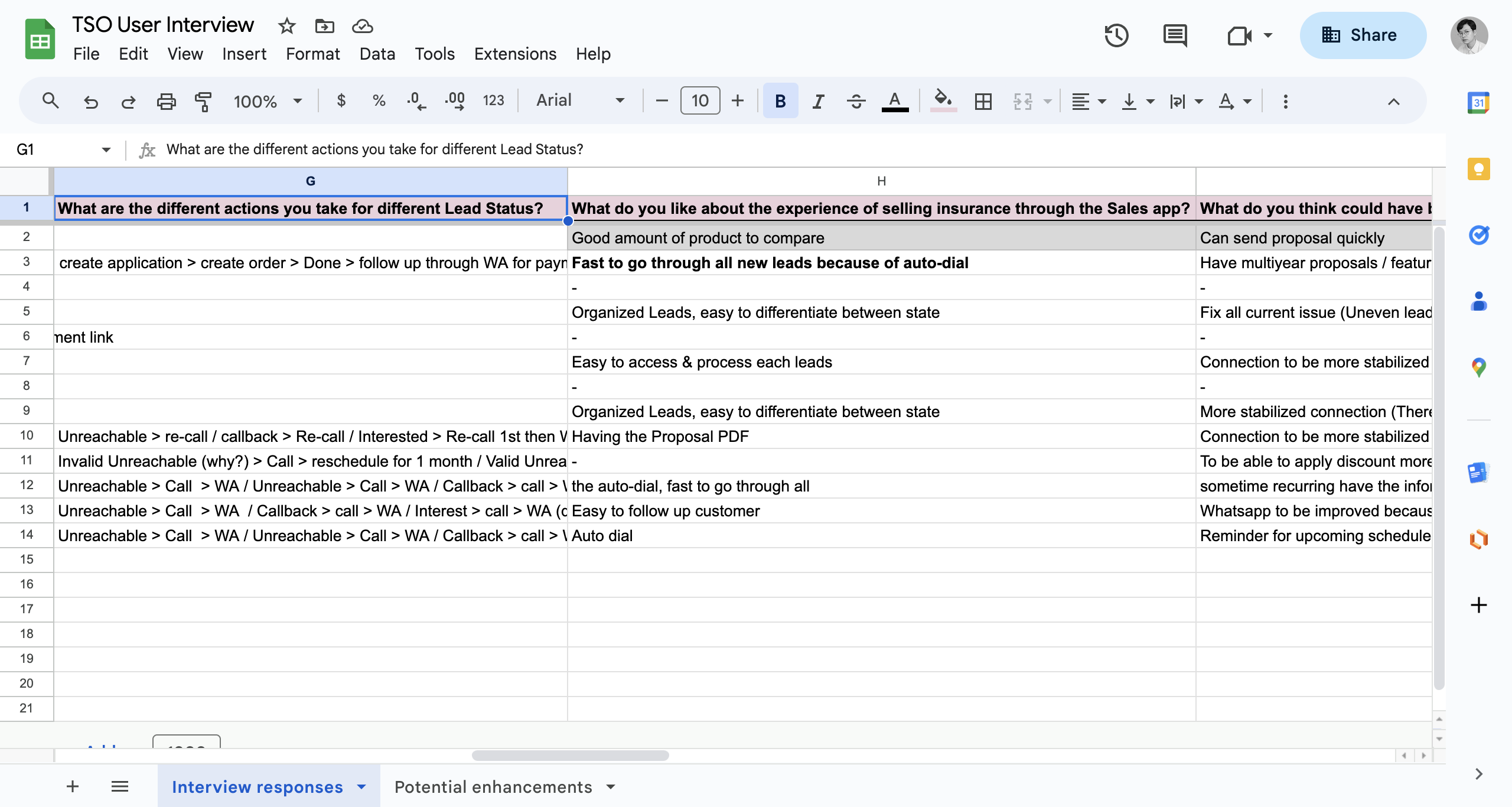
- What do you like about the experience of selling insurance through the Sales app?
- What is the usual path you go through from lead assignment to closure? (Describe typical journey)
- What are the problems or hindrances you face while selling insurance in the overall journey? (Probe interviewee to think deeply by asking for problems in different stages of lead journey- Leads details page, Product listing page, comparison page, order page, payment page, etc.)
Ask the below questions for each problem TSO describes
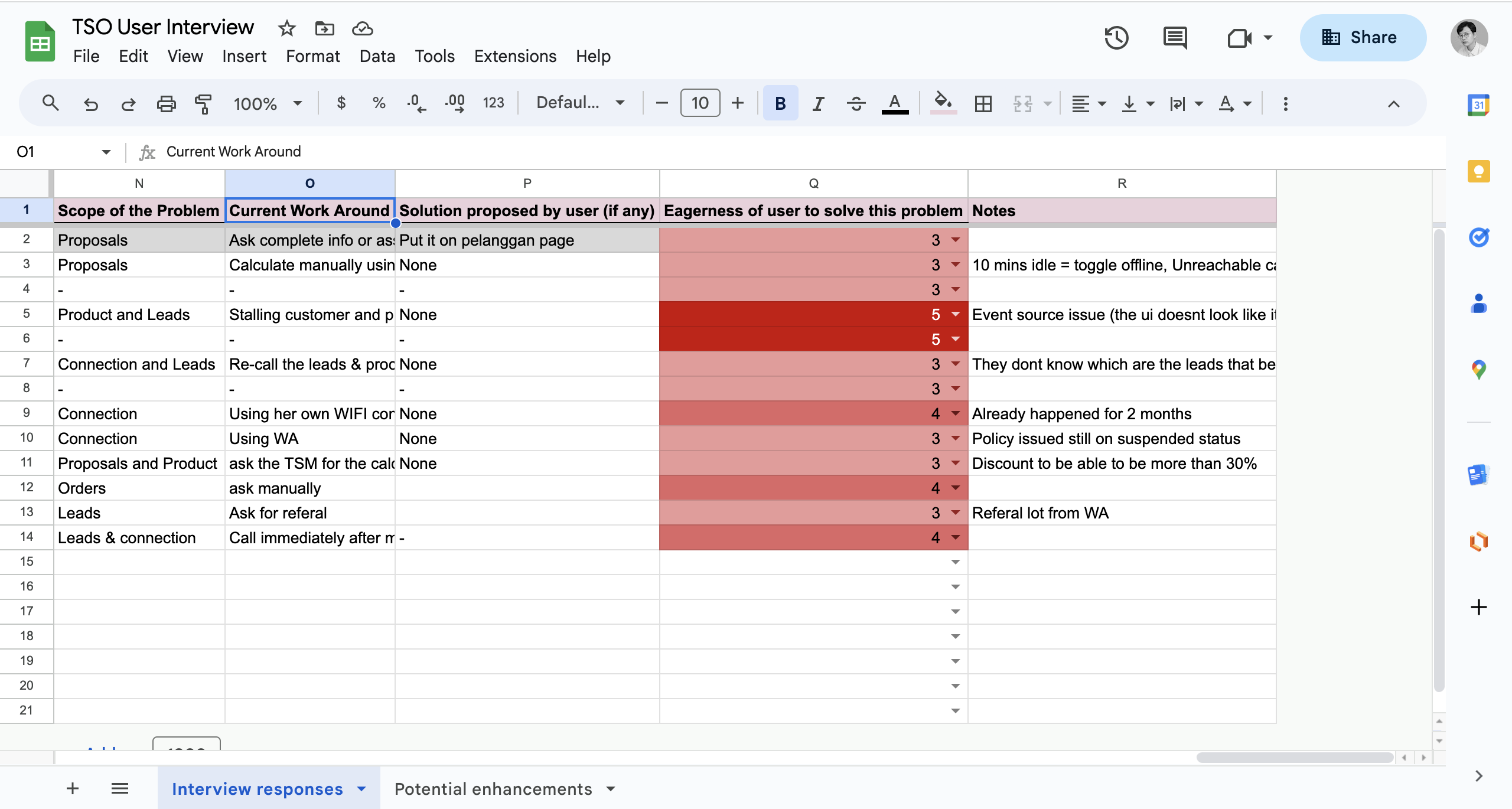
- What is the frequency or intensity of the problem?
- What is the scope of the problem?
- How do you solve that problem right now? Any workarounds?
- How eager are you to get this problem solved? [Rate: 1(very low) - 5(very high)]
- What’s the solution you suggest?
Ano Questions
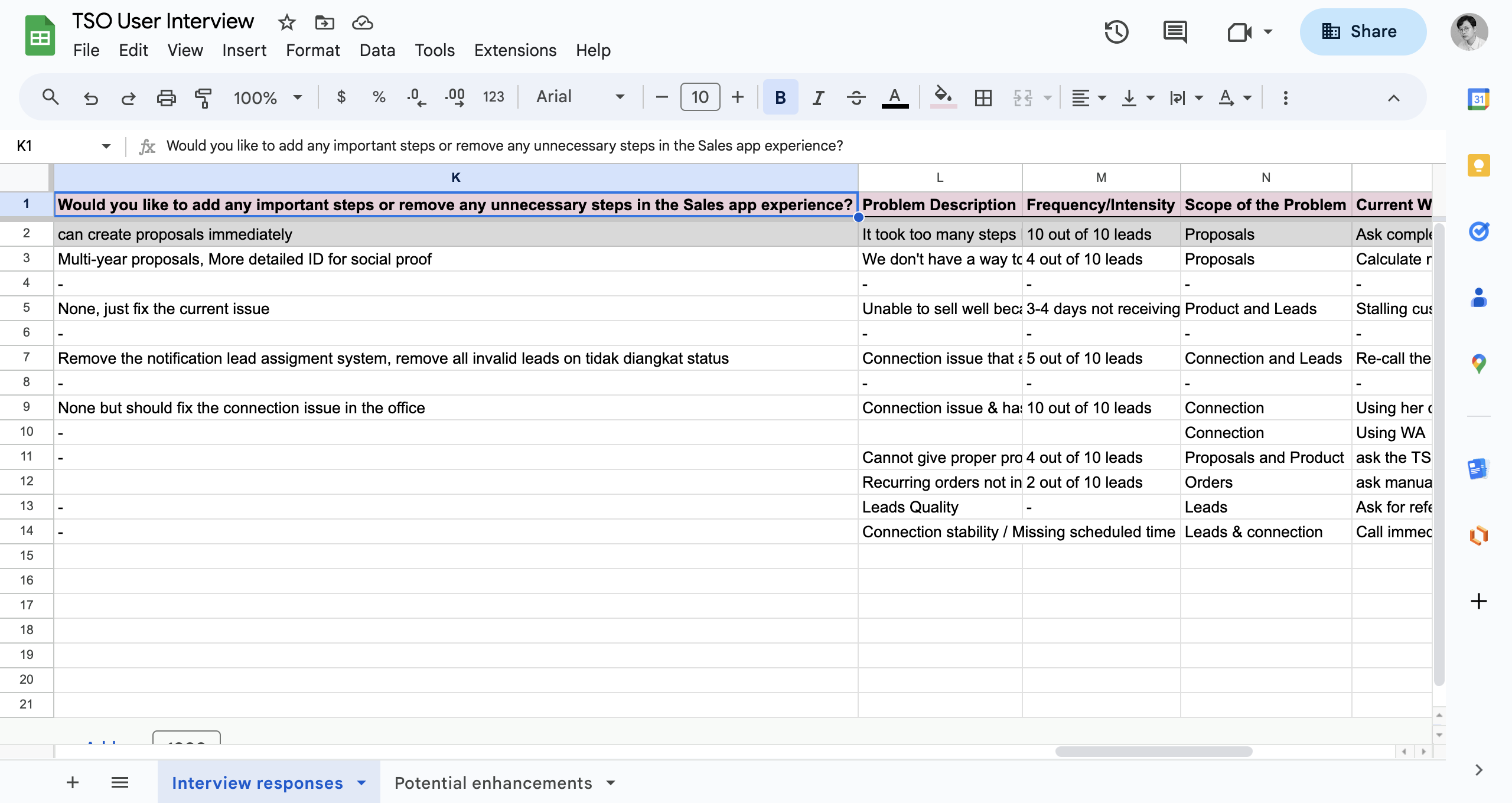
- What do you think could have been better in the Sales app to speed up the process of converting leads?
- Would you like to add any important steps or remove any unnecessary steps in the Sales app experience?
With Stimulus (Sales app)
Make the interviewee open the Sales app and repeat the above questions. Probe them to go through a dummy lead journey and ask questions at each stage to dig deeper and identify deeper problems.
Research Respons
Potential Enhancements
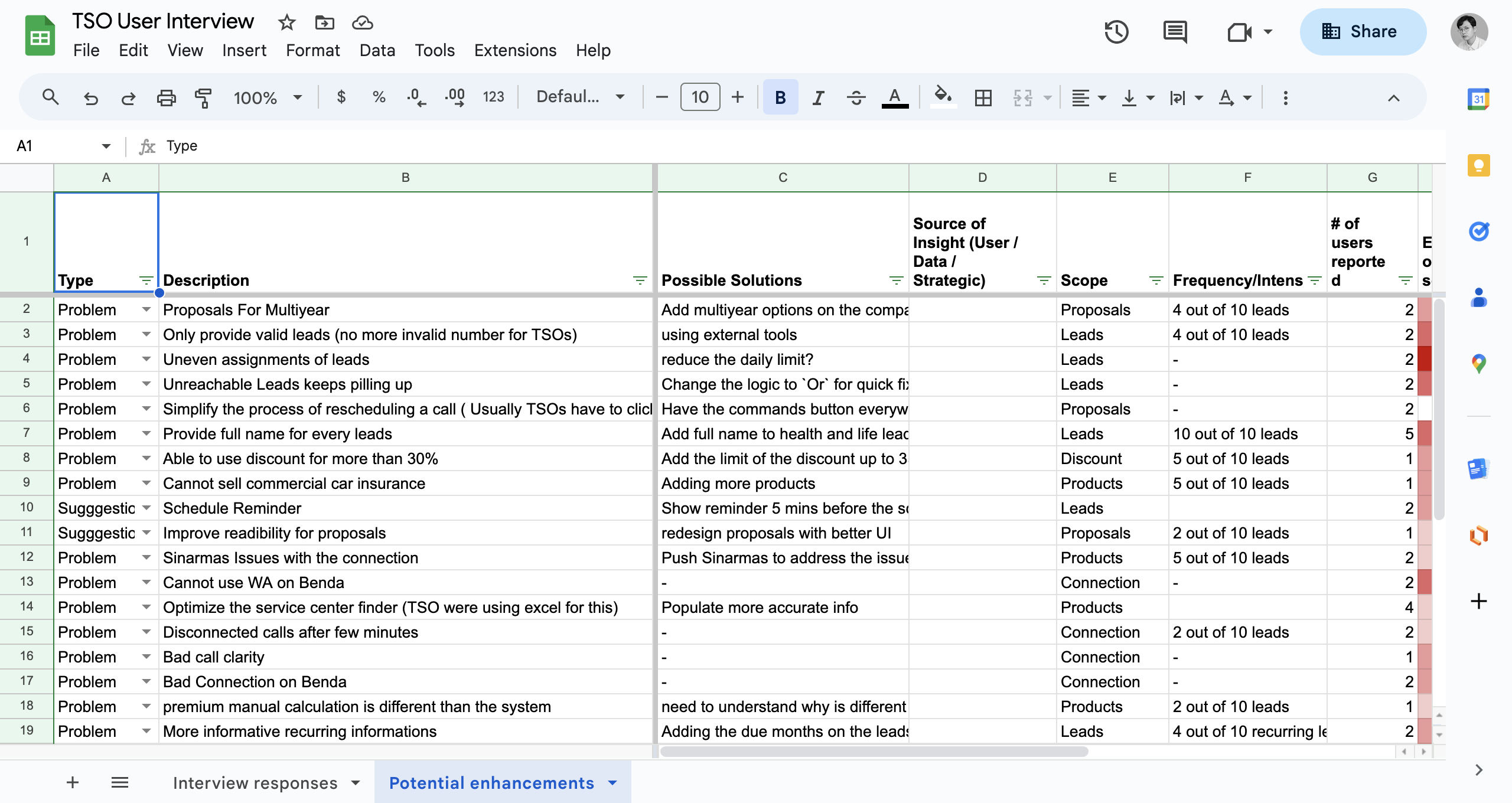
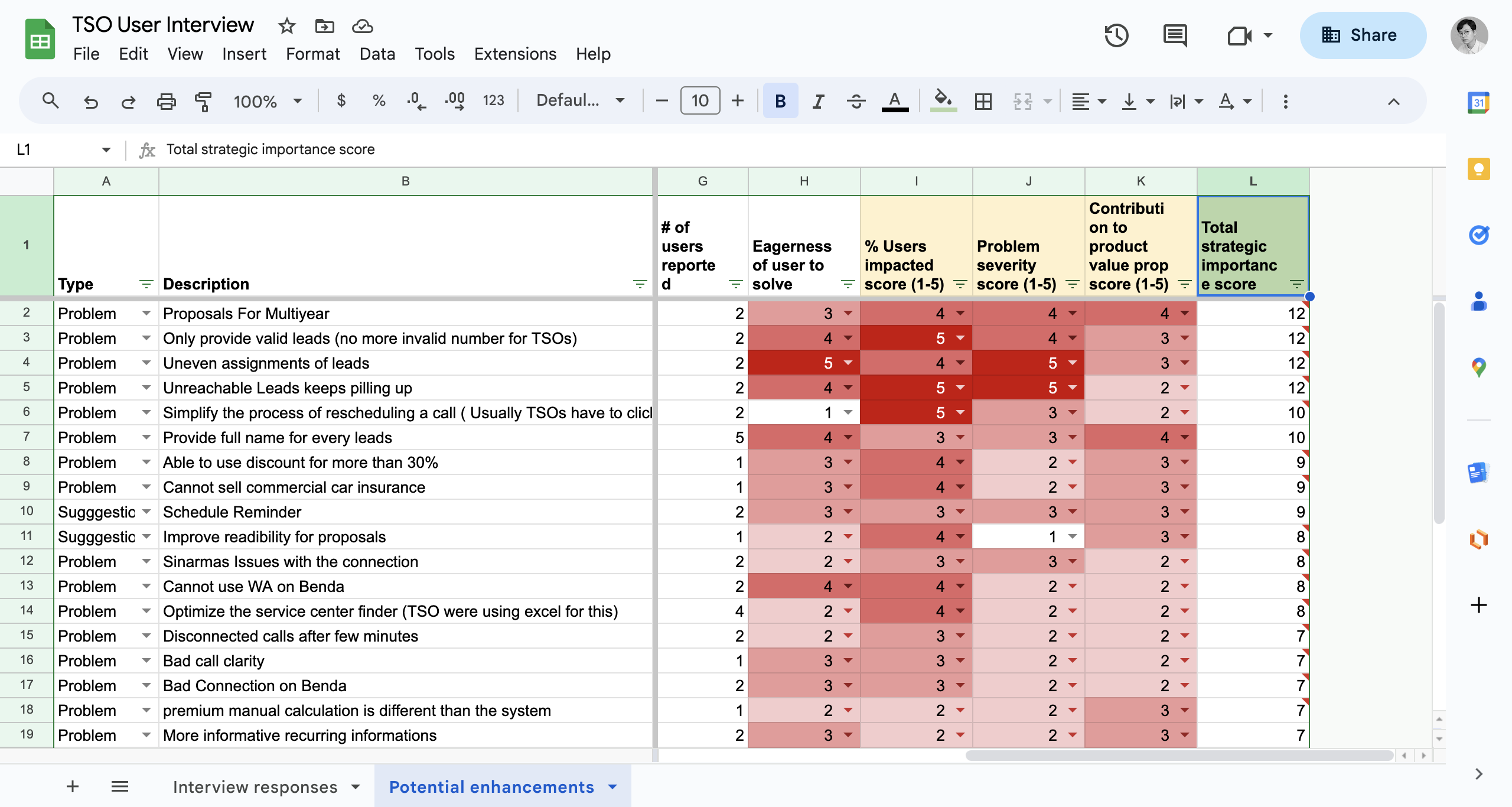
Step 3: Conduct Qualitative Research with SPVs
Interview 2-3 SPVs and ask them the same questions as above (with or without a sales app, doesn't matter).
Step 4: Analyze Quantitative user behaviour data
- Start capturing user activity data using Google Tag Manager
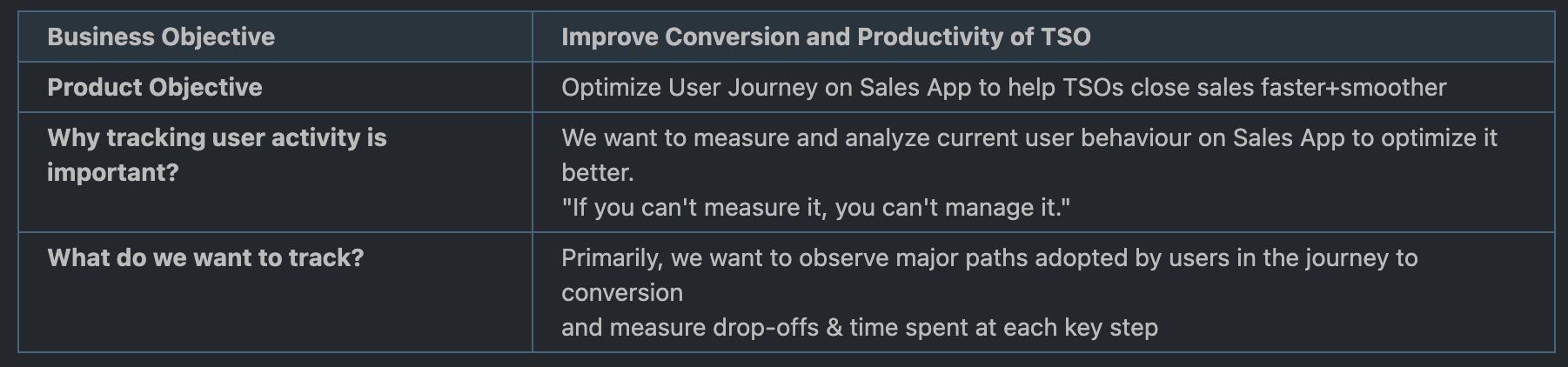
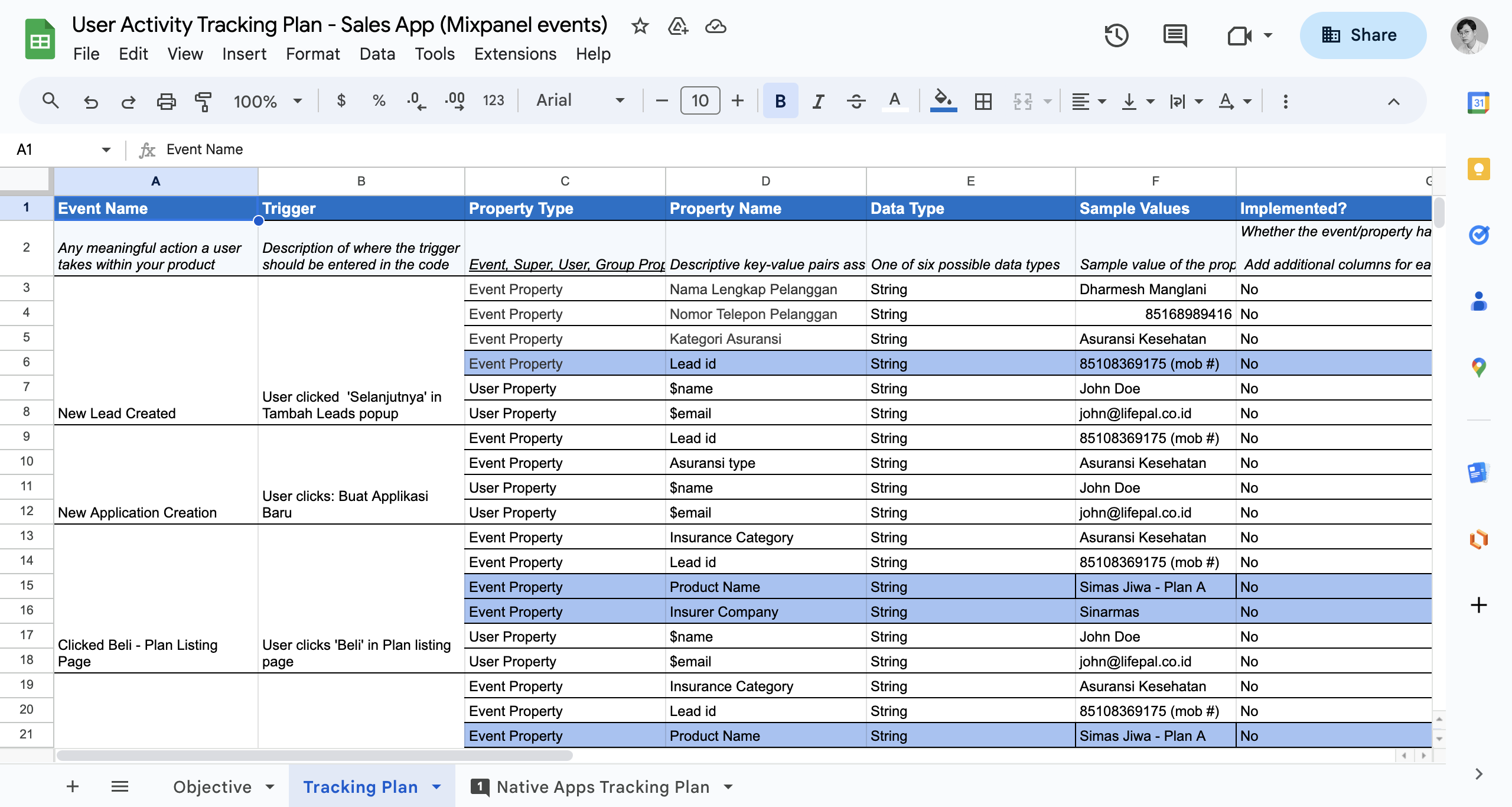
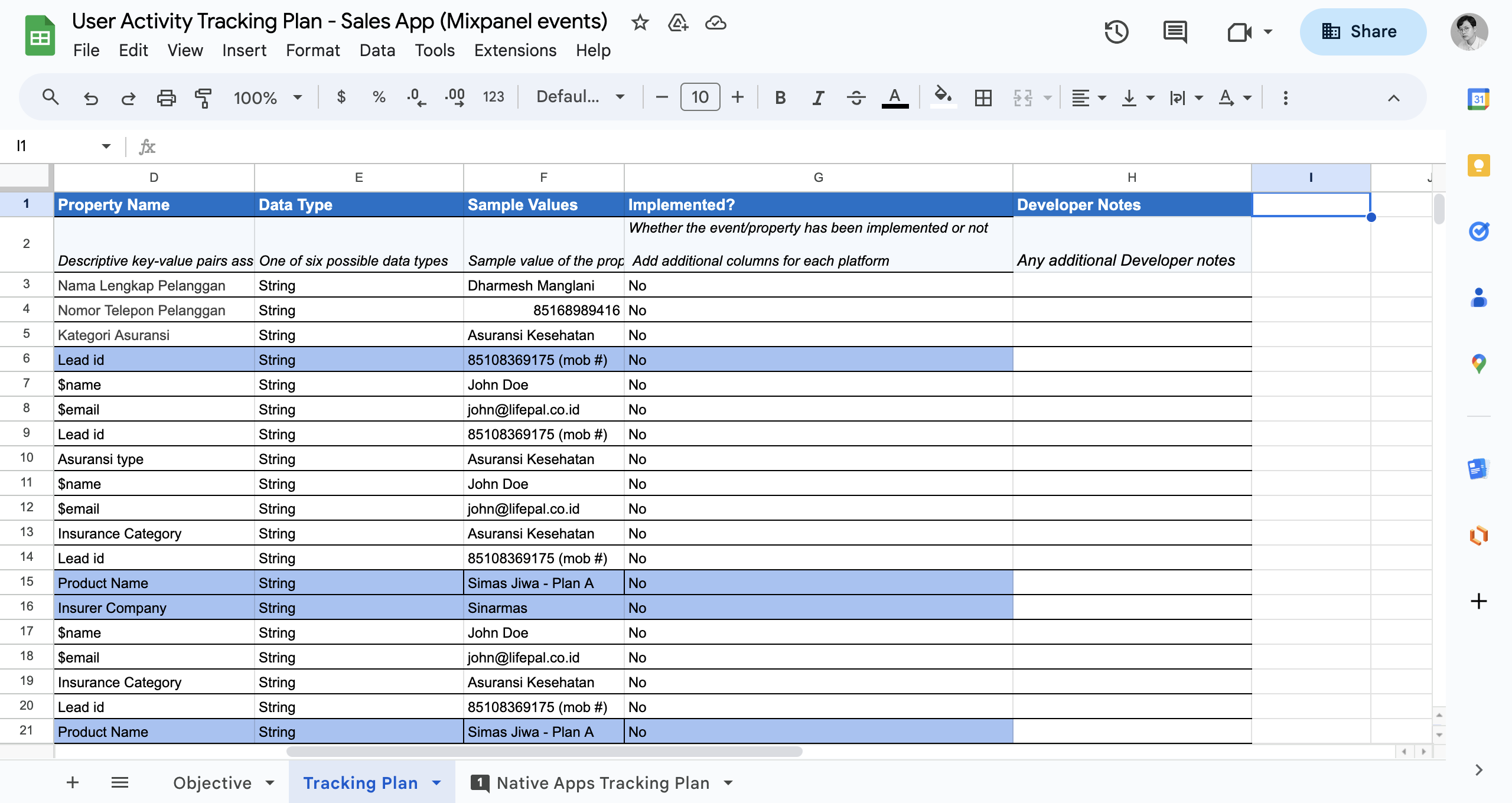
User Insights from Mixpanel
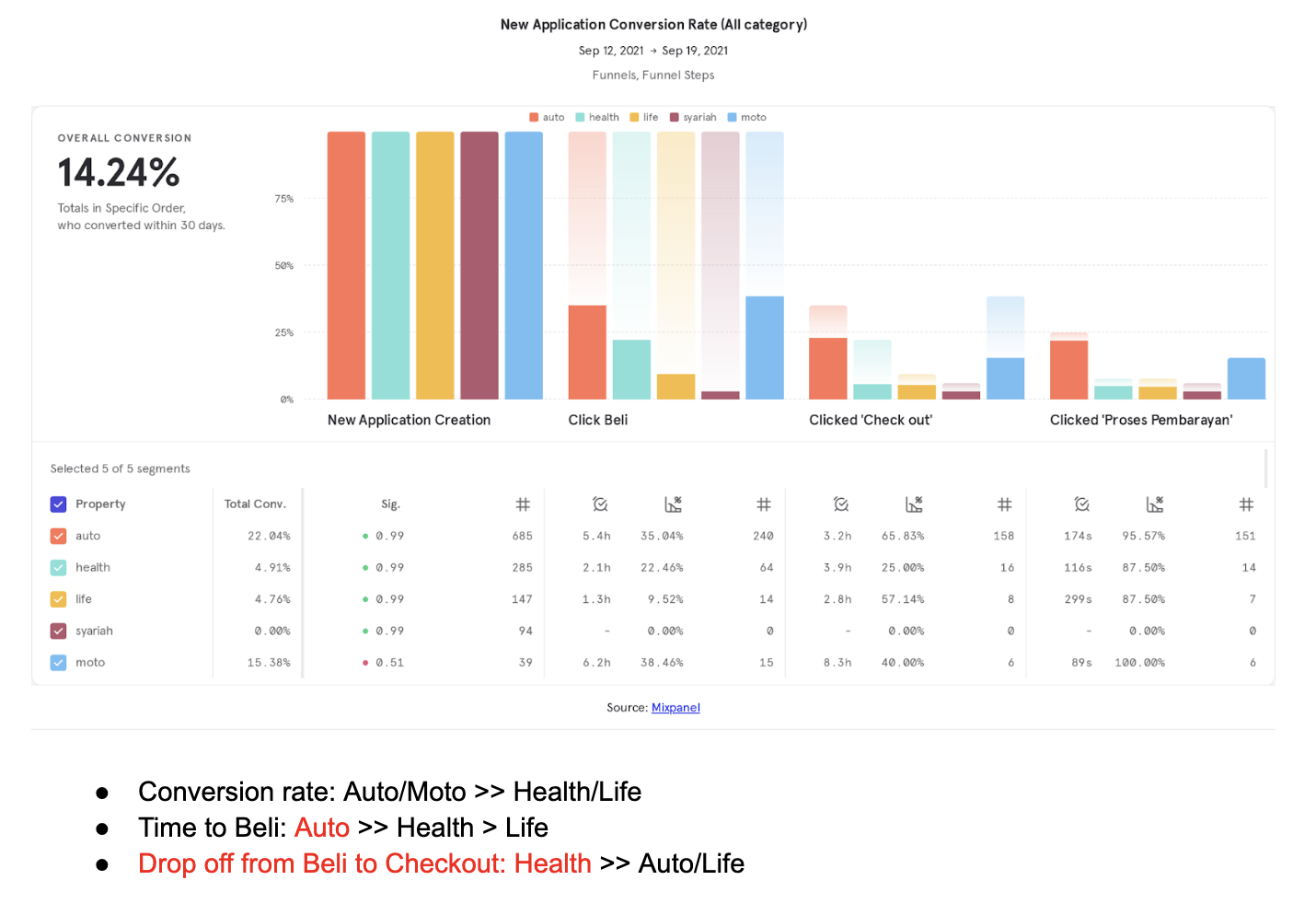
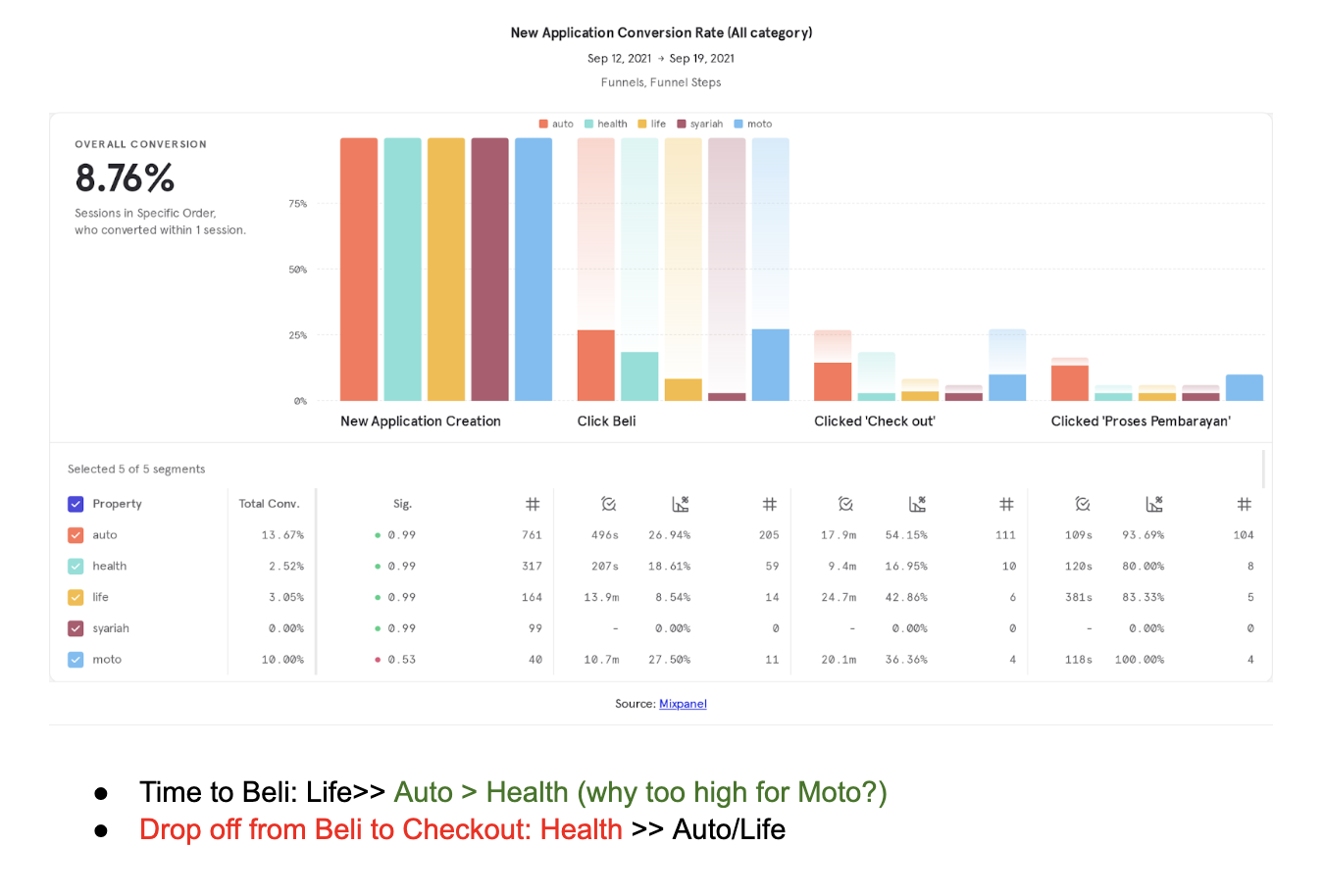
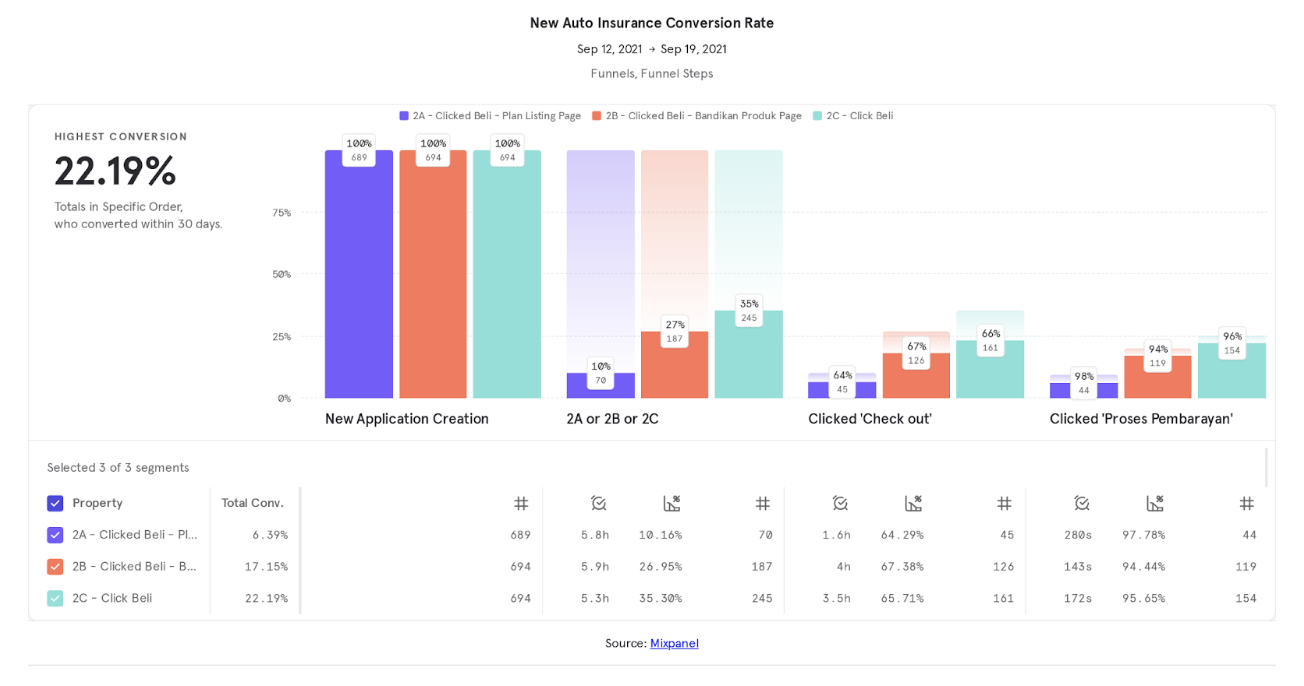
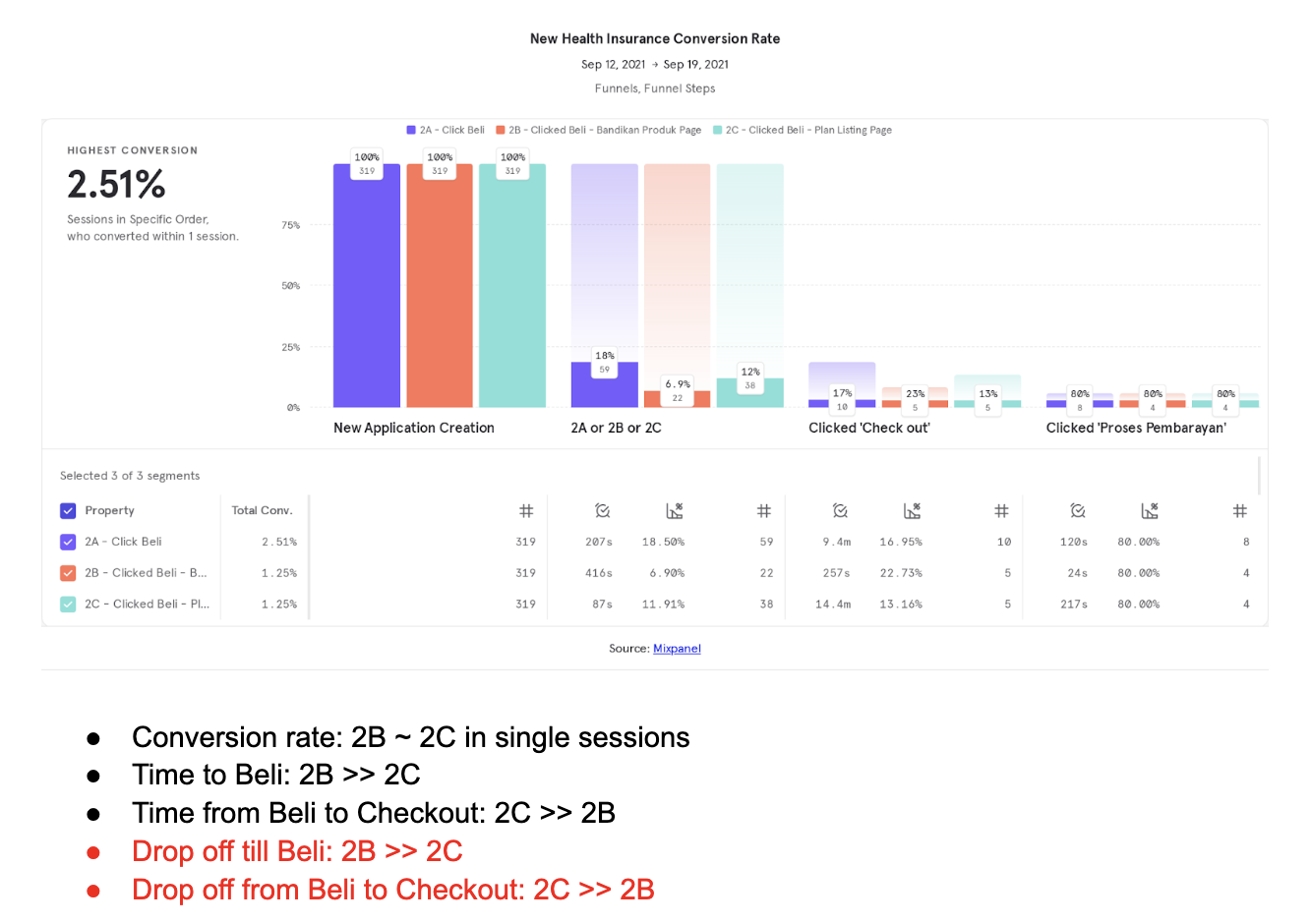
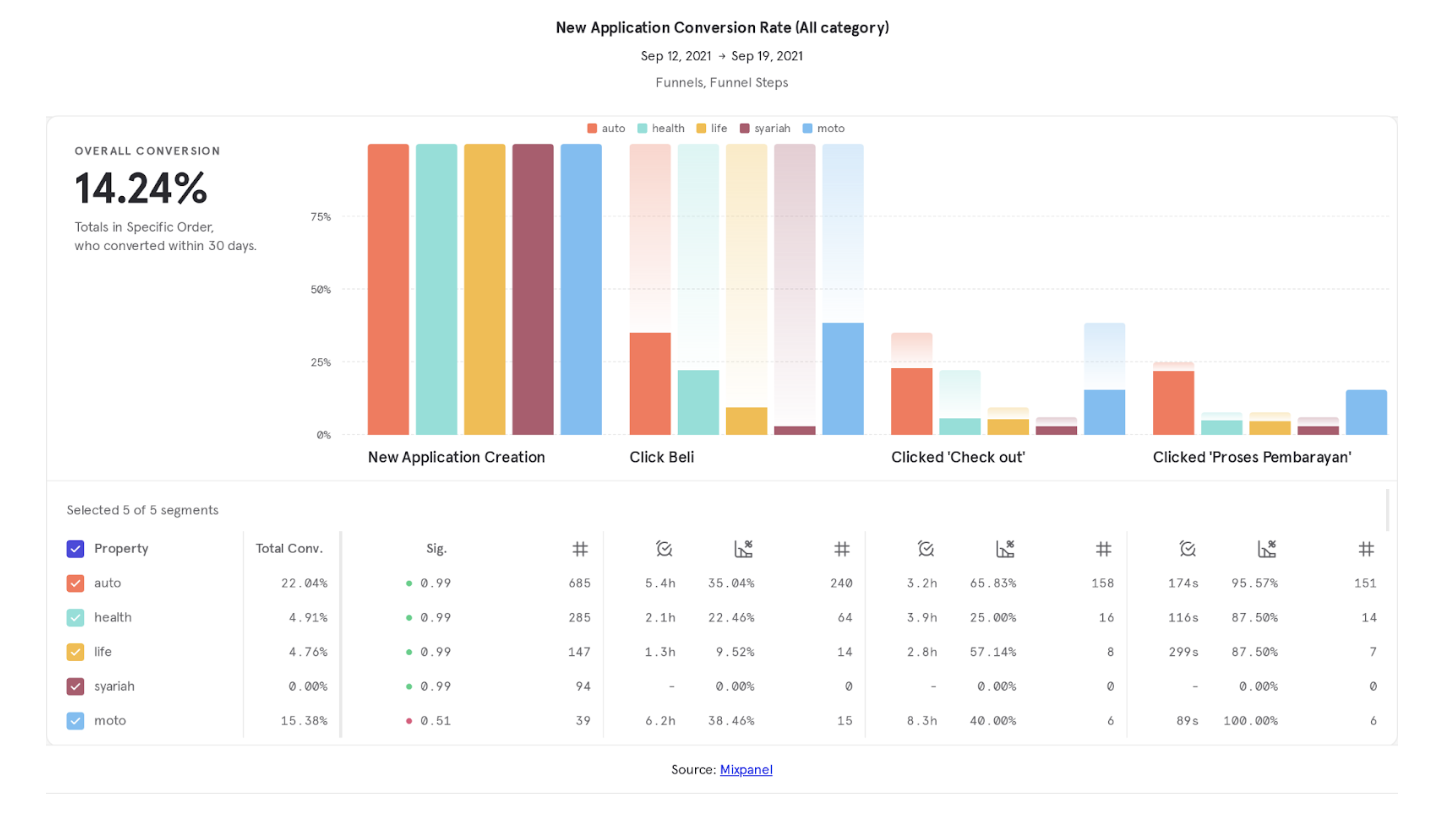
For Auto: Around 2x more conversions are happening after viewing/sharing Product Comparison than without it. → Thus providing a Quick Product Comparison button on the leads info page can help convert leads faster.
For Health: High drop off of users from Beli to Checkout because of below mentioned reason → Thus reducing steps and making one page journey can help reduce drop offs.
Synthesis
We will adapt the Decision First approach to gather user insights and synthesize user feedback. Firstly, we will define the decision to take, which will inform us about what data/evidence we need to collect. Hence, having an exact understanding of required evidence, we will proceed to do research which will enable us to make data-informed decisions.
Preview
Selected Works

TestSelling insurance via unassisted conversion (pure ecommerce) as one of the topline growth channels.
Insurance Marketplace Unassisted Conversion - DuplicateSelling insurance via unassisted conversion (pure ecommerce) as one of the topline growth channels.

4Project type

3Project type

Project 2Project type

My first projectProject type